Getting an air conditioning system right matters in Needham. Summers are humid and can push indoor systems hard, winters make heating priorities clear, and older homes present surprises behind plaster and in basements. A properly sized, well-installed unit will shave your electric bills, avoid premature repairs, and keep indoor comfort stable. Done poorly, the same system pays you back with short cycles, persistent humidity, and a steady drip of service calls that add up far faster than the original savings on a cheap install.
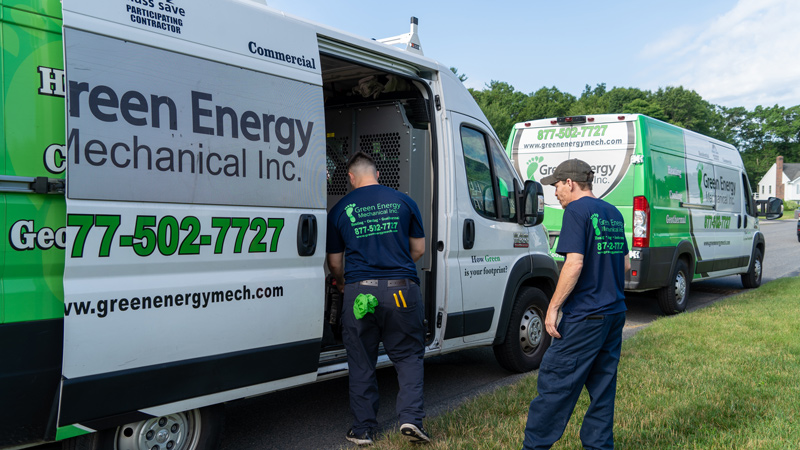
I have stood in basements where the ductwork looked like an afterthought, measured loads that were twice what a homeowner expected, and seen a high-efficiency condenser crippled by poor airflow. Below I lay out the practical decisions and trade-offs that matter for AC installation in Needham, from equipment selection to the final commissioning and the handoff to long-term maintenance. Green Energy AC Heating & Plumbing Repair appears in several examples because local installers will often be the difference between a one-season fix and a system that lasts 12 to 15 years with consistent efficiency.
Why focus on installation over brand A great brand can still perform poorly if the installation is wrong. The most efficient equipment loses efficiency with undersized ductwork, improper refrigerant charge, or a mismatched air handler. Conversely, a well-installed mid-tier unit can outperform a high-end model that was simply not set up correctly. Prioritize an installer who understands load calculations, refrigerant diagnostics, and airflow measurement.
Sizing and load calculations: stop guessing The first step is a proper heat load calculation. Not an estimate based on square footage, but a room-by-room Manual J calculation that accounts for insulation levels, window orientation, air infiltration, shading, and internal heat gains from appliances and occupants. In Needham, many homes were built before modern insulation standards; attics and knee walls often leak energy. A typical older 1,800 to 2,400 square foot colonial with average insulation might need 2.5 to 4 tons of cooling, but that number can vary by more than 30 percent once you account for upgrades or attic ventilation.
If an installer quotes tonnage without a calculation, treat that as a red flag. Oversizing leads to short-cycling, poor dehumidification, and more wear. Undersizing forces long runtime and higher electrical demand. Both have real costs: expect 10 to 20 percent efficiency loss from improper sizing, and humidity problems that make a home feel uncomfortable even when the thermostat reads cool.

Match components for performance, not just labels Split systems have a condenser, an air handler or furnace coil, and a thermostat. Each must match the others. share.google Mixing a high-efficiency outdoor unit with an older coil can create refrigerant flow problems or limit the system’s SEER rating. Conversely, replacing an outdoor unit without confirming the evaporator coil condition is a common mismatch that generates callbacks.
If a homeowner wants a variable-speed condenser or inverter-driven heat pump, confirm the indoor unit supports the control strategy. Variable-speed systems modulate to maintain steady temps and better remove humidity, but they require proper controls and a duct system that does not leak excess air. Some upgraded technology will only deliver expected performance when the ductwork and airflow are within the right parameters.
Ductwork matters more than most people realize Airflow is the single most common culprit behind poor cooling performance. Contractors often focus on equipment and forget the pipes that distribute conditioned air. Measure static pressure across the system and evaluate each run for sizing, insulation, and leakage. In many Needham homes, ducts were sized for a gas furnace in the 1970s and are inadequate for a modern AC's airflow demands.
Sealing and insulating ducts in unconditioned spaces improves efficiency measurably. Tape and mechanical fasteners are not enough; use mastic or approved foil-backed tape, and insulate ducts with at least R-6 in unconditioned crawlspaces or attics. Expect a sealed and insulated duct system to cut inefficiencies caused by leakage by 10 to 20 percent, which shows up directly on your electricity bill during summer peaks.
Refrigerant charge and airflow tuning: the hidden calibration A perfect installation includes precise refrigerant charging and airflow measurements. Many installers rely on factory superheat and subcooling charts but skip the dynamic verification. The correct refrigerant charge depends on line length, elevation, and the matched coil. Too little refrigerant and the system runs hot and inefficient, too much and the compressor works harder and risks flooding oil into the lines.
After charging, measure supply and return temperatures, calculate the delta T, and adjust blower speeds if the unit allows. Typical sensible cooling delta T should fall between 16 and 22 degrees Fahrenheit for many systems, though variable-speed systems will show lower deltas with higher dehumidification capability. If the delta T is outside reasonable ranges, dig into airflow or refrigerant charge rather than accepting a numeric label as the final word.
Electrical service and demand considerations Check the home’s electrical service and panel. Newer condensers have higher startup currents even if they run efficiently. If your panel is 100 amps and the home has several modern circuits, an upgrade to 200 amps might be necessary to avoid nuisance trips. Confirm that the chosen unit’s minimum circuit ampacity and maximum fuse sizes match the site’s wiring.
Consider smart thermostats that manage compressor staging and hold-off cycles during peak demand. Some utilities in Massachusetts offer demand response incentives, which can reduce peak bills if your system participates during heat waves. Ask the installer whether the system can integrate with local programs.

Choosing efficiency levels: SEER, EER, and real-life trade-offs SEER ratings provide a relative sense of efficiency, but the real-world difference depends on how your system will be used. In Needham, where cooling season lasts a few months and humidity control is as important as temperature, a higher SEER unit with a variable-speed compressor can deliver better comfort and lower peak demand. But the cost premium can be significant. Upgrading from a 14 SEER to a 20 SEER system could cost 20 to 40 percent more at purchase. Calculate payback not only in kilowatt hours but in improved dehumidification and reduced service visits.
EER is a steady-state metric at a specific outdoor temperature and can be useful for comparing models under local summer peak conditions. If your house has frequent afternoon solar gain, prioritize a unit with both a high SEER and a good EER. Discuss expected seasonal savings with your installer; a transparent contractor will model energy use rather than making broad promises.
Noise, vibration, and placement decisions Condenser placement influences noise, airflow, and longevity. Place condensers away from bedrooms and neighbor windows, on a level pad, and allow clearance for airflow and service access. If your yard faces limited space, consider sound-reduction measures such as condenser walls, fences that allow air movement, or anti-vibration mounts. These are small investments that pay off in comfort and neighbor relations.
Condensers sitting on bare soil can collect moisture and lead to corrosion. Use a concrete or polymer pad and keep vegetation trimmed to maintain airflow and reduce maintenance headaches.
Permits, rebates, and paperwork A valid installation includes permits and a final inspection in many towns. Needham’s building department requires proper permits for HVAC modifications and condenser installations. A reputable installer will pull permits and provide documentation required for local codes and for tax or utility rebates.
Speaking of rebates, Massachusetts offers efficiency incentives through Mass Save and other programs, and manufacturers or utilities sometimes have coupons for high-efficiency systems. Ask for an estimate both with and without available rebates. Some incentives require specific program-approved installers, so confirm licensing and program participation before signing.
Installation day: what to watch for On installation day, watch how the crew treats existing materials. Protect floors and landscaping, ask for a work timeline, and require the crew to show a written checklist of completed items. A simple five-item checklist like the one below often separates a professional install from a rushed one. Use it as a basic handoff to confirm nothing is overlooked.
Checklist to expect at handoff
- Manual J load calculation and equipment sizing documentation provided. Duct sealing and insulation work completed where needed, with before and after photos. Refrigerant charging verified with temperature and pressure measurements, with superheat or subcooling values recorded. Electrical connections and breaker sizing confirmed, with panel labeling updated. Work area cleaned, condensate lines tested for flow, and thermostat programming demonstrated.
Commissioning and homeowner education A system without proper commissioning is a missed opportunity. Commissioning verifies operation across conditions, checks safety controls, and documents performance. The installer should run the system, measure temperatures and pressures, and show you the recorded values. They should also walk through thermostat operation, filter replacement intervals, and annual maintenance expectations.
Spend time learning simple diagnostics. For example, a short-cycling unit that runs 4 to 6 minutes then shuts off often points to oversizing or airflow problems. A system that runs non-stop but doesn’t cool suggests low refrigerant or a reversing valve issue in heat pump systems. Knowing a few symptom-action pairs helps you communicate clearly if a problem arises.
Maintenance: preserve efficiency over the long term Installation is only the beginning. Regular maintenance preserves efficiency and avoids emergency service calls. Consider the following maintenance tasks that will extend equipment life and maintain performance. This second short list highlights essential recurring actions.
Essential maintenance tasks
- Replace or clean filters every 1 to 3 months depending on use and filter type. Annual professional tune-up in spring, including coil cleaning and refrigerant check. Keep condenser clear of debris and maintain 2 to 3 feet of clearance around it. Address minor duct leaks and insulation issues as they appear. Ensure condensate drains are unobstructed and sloped properly.
Emergency response and service reliability Even the best systems sometimes fail. When that happens, search for "emergency AC repair near me" but look beyond response time to qualifications and diagnostic procedures. A quick fix that bypasses root problems often returns. Choose a local service with transparent pricing and the willingness to inspect before replacing parts. Green Energy AC Heating & Plumbing Repair is one local option that offers both installation and emergency support in the area; evaluate any company by asking for references, proof of insurance, and examples of past installations similar to your home.
Common pitfalls and how to avoid them A few recurring mistakes keep showing up and are avoidable. Expect the installer to:
- Provide written load calculations and equipment match details. Explain why a proposed efficiency level makes sense for your house and budget. Show proof of permits and a timeline for inspections.
Beware of low-ball bids that skip duct evaluation, omit refrigerant verification, or rely on undersized electrical wiring. Those shortcuts save labor today and create higher utility and repair costs tomorrow.
When replacement makes sense versus repair If your system is over 10 to 12 years old, weighs heavily in repairs, and runs inefficiently, replacement often makes financial sense. New systems with modern compressors and better controls can reduce cooling-related electricity usage by 20 to 40 percent, depending on the starting point. Factor in the likely remaining life of the old system and repair frequency. For example, if a compressor repair costs several thousand dollars and your unit has already had multiple major fixes, replacement typically yields the better long-term outcome.
Final thoughts and next steps Plan around a documented process rather than a low price. Demand transparent calculations, proper ductwork attention, accurate refrigerant charge, and commissioning. Balance efficiency goals with budget constraints, and remember that the most efficient system on paper will only deliver when the supporting work is done correctly.
If you live in Needham and are comparing quotes, request the Manual J calculations, ask for references for local installs, and see before-and-after photos of ductwork and condenser placement. When emergency calls arrive in the summer, the companies that prioritized proper installation upfront are the same ones that respond reliably and diagnose issues correctly. That attention to detail is what separates a temporary fix from a decades-long solution.
Green Energy AC Heating & Plumbing Repair
10 Oak St Unit 5, Needham, MA 02492
+1 (781) 776-9046
[email protected]
Website: https://greenenergymech.com